Category: blog

  • SOLE – self organising learning environments

    SOLE – self organising learning environments

    Self Organising Learning Environments… and what it means for the future workplace

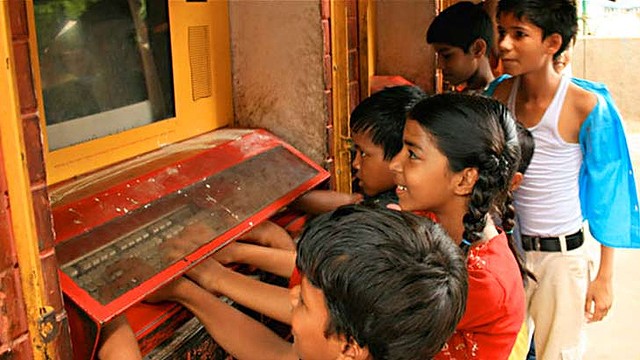
    Anyone who has come across TED prize winner Sugata Mitra’s Hole In The Wall computer experiment in India (see videos below) will realise that organisational management is not the only human activity facing a crisis nowadays, but so is education and schooling in its traditional forms. Both management and teaching suffer from the innate habit of its professionals wanting to micro-manage everything, wanting to command and control, indeed trying to control outcomes, rather than letting them emerge. Sugata Mitra calls for creating Self-Organising Learning Environments (SOLE), and his experiments have shown some surprising results.

    In SOLE “teachers” should not supply answers, but raise questions instead. It is not about making learning happen, but letting it happen. Too often the urge is for us to interfere. As Eton former headmaster Tony Little has said, not enough attention is paid to learning from peers; contending that what makes a school great is not good teachers, but creating an environment where learning can happen among peers. Peer learning is so much more powerful than is assumed, as the hole in wall experiments have shown; the problem is that this is also worrysome for managers and teachers alike: in SOLE they cannot control it, the learning happens by itself. Managers and teachers alike find it hard to let go.

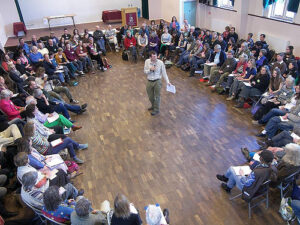
    A similar self-organising principle takes place in Open Space Technology (commonly Open Space) meetings. Open Space is all about letting conversations happen, rather the making them happen through a controlled or moderated program. There is a marketplace of ideas, people group and regroup in a completely self-organised way and move around freely, thus maximising peer learning, peer problem-solving or peer co-creativity. Open Space merely sets the environment or the right conditions for deep passionate conversations to happen. Those who try to “improve” this seemingly unmanaged process, actually interfere and disrupt the natural self-organising, and all too often poor micro-management and controlling patterns set back in. The biggest challenge in SOLE, Open Space or other self-organising systems is preventing managers, teachers or moderators from interfering – getting them to just let go.

    “You cannot teach a man anything. You can only help him discover it within himself.” Galileo Galilei

    That self-organised peer learning works I can attest through personal experience. In the 1980’s I was working as language project manager / director of studies at Suzuki Motors HQ in Japan for the massive ‘technology transfer’ project, transferring Suzuki’s manufacturing and management skills (what was later termed Lean Manufacturing, Lean Management, or Lean by others) from its plants to partner Canadian company, CAMI Automotive in Ontario. The essence of Lean is that it is not just about the system employed, but just as importantly about the high level of responsibility delegated and trust accorded to those actually doing the work, the ‘workers’ on the shop floor. Our task was to train over 200 shop-floor team leaders in basic English communication skills and training skills, so that they could train 2,000 Canadian workers in those Lean skills (at that time practically no-one in the West knew what Lean was or how it worked). Toyota were also undertaking similar joint-venture projects at the time (e.g. Nummi, Derby) but took a different approach, sending hundreds of their managers across as expatriates to manage the plants. Suzuki did not have the resources to do that, moreover it had undertaken to operate the CAMI plant as a collaborative venture with the Canadian Automotive Union employing local managers right from the start of production, so it was paramount that the transition and training run smoothly.

    The problem was that the Japanese team leaders were highly skilled in the work, but had absolutely no foreign language skills (indeed they had never been abroad) and had essentially been school drop outs, with a clear distaste for formal schooling. The idea that they, at 40 or 50 years old, should suddenly go ‘back to school’ to learn a new language was utterly repulsive to them, and many had threatened to leave the company – they had already ‘given up’ before even starting.  It was clear that any more conventional form of language and cross-cultural training program was out of the question.  That is precisely why we, our company, were brought in at the time, as we had already had plenty of experience successfully running training programs for ‘blue-collar’ workers, particularly at Kobelco.

    “If you want to build a ship, don’t drum up people to collect wood and don’t assign them tasks and work, but rather teach them to long for the endless immensity of the sea.” Antoine de Saint-Exupery

    Our approach was unconventional. Instead of spoon-feeding elements piece by piece, we created a total physical context or environment and relied completely on the power of self-organised peer learning, using approaches like ‘Total Physical Response’, ‘Suggestopedia’ and ‘Structuro Global Audio Visual’ learning. These are all holistic and context driven in nature (which is how babies learn!), much like the computer in the wall. Without going into detail here, it was not what the team leaders had feared, and not only did they have great fun with the approach, they learned so much and quickly from the peer activities, that their attitudes and enthusiasm changed completely, to everyone’s delight.

    The second half of the 6 months program was devoted to developing the supervisors’ technical training skills, in English. Most conventional technical English courses would start by teaching an array of technical expressions and role-playing simulated situations step by step. We did none of that! Our program, called SPEC and developed by David Vale, consisted of an empty room, with walls prepared so that notices, posters, kanban etc could be stuck on them, a corner with a rich resource of source material (technical books, magazines etc, nowadays we would put computers, but they weren’t around in those days and neither was the internet!), and a marketplace of projects. Their job was to prepare their workplace training material in English and practice teaching it (practicing with each other). The only thing we gave them were a few guidelines and framework expressions for doing a presentation or running a training session (they had already learned training meta-language from previous TPR). They had 8 weeks with 4 hours each day together in the same room to get ready.

    Jigsaw puzzle handsEach day we started in a circle (everything we did always started and finished in a circle), and they would start by deciding what areas they each wanted to work on, and posted their information on the marketplace board. They then naturally grouped together according to their needs, they moved around to other groups as they needed to, and they prepared, organised and practiced with and from each other. We instructors did not interfere at all in this self-organising process, nor in the material they were actually working on. It was all entirely driven by them and our only role was as a resource person, answering questions and giving specific cultural feedback when it was requested. It worked beautifully. At the end they achieved their mission. I cannot emphasise enough how powerful self-organised peer learning can be, if the learning is allowed to emerge, rather than coerced (most teaching or training is trainer-led ‘push’ imposition rather than ‘pull’ emergence).

    At the time I had not heard of Open Space Technology (there was no internet), but when I later discovered Open Space I immediately recognized that it was exactly what we had been doing, but instead of in a meeting or conference context, ours was in a classroom learning setting. Instead of 2-3 full days of Open Space, it was 40 half days of SPEC, but fundamentally following the same self-organising peer-driven process. It is also the same self-organising peer-learning principle which plays in SOLE. The biggest challenge for me as the manager at the Suzuki project at the time had not been the initially very reticent learners – once they realised that self-organised peer learning could be fun and rewarding they were absolutely fine. Ironically the biggest challenge was some of the instructors on our own team – we had had to hire highly qualified instructors for image reasons (the clients wanted good bios and qualifications), yet I then had to ‘unteach’ them almost everything they had learned to do as instructors. Some took it up quickly, but others found it very hard indeed to let go and let be.

    I should add the project was highly successful. The subsequent training of the Canadians was so effective that most of the Japanese supervisors were able to return to Japan after just one year instead of the planned two years – the cost savings to Suzuki was enormous compared to the initial training costs. This new ‘bilingual’ team of trainers were then available for new assignments – they were subsequently sent on 2-3 year stints to Hungary, India, Malaysia, Thailand and eventually China, from which we see some of the huge changes from shabby box vehicles to modern cars in the new Skodas, Tatas and Protons. I would like to think that our Open Space / SOLE type of training contributed to the economic rise of Eastern European and Asian economies as a support mechanism, though l think that would probably be stretching it a little bit too far; after all they were all joint efforts. Equally I’m pretty certain it is fair to say that it would be wrong to assume that Open Space or SOLE had no role to play at all.

    The SOLE principle is also the one we are applying to Caterfly. For a transformation program or implementation of new systems to succeed it is imperative that all affected people are invited in to co-decide, co-learn and co-create the change together. This has to be free of manipulation and needs to be seen to be free of vested interest. The self-organising peer-learning nature of Open Space is ideal to start the leaning process, and let emergence work its wonders. Cocooning the coaching period between beginning and end Open Space events sets protective boundaries within which things can be tried out, played with and people can learn from each other. Caterfly is built on the idea of inviting people into the change process, rather than coercing them, and on the self-organising peer learning that emerges. You cannot control the outcome, the only thing you can do is give it some direction by the questions you ask.

    As the brilliant former Wharton Business School professor Russell Ackoff has said (BBC Interview with Peter Day): “Anyone who’s ever taught a course is aware of the fact that the one who learns the most is the teacher. So schools are upside down. The students ought to be teaching. You cannot teach unless you learn. The faculty ought to be learning, that’s what it knows how to do, it doesn’t know how to teach. The old fashioned Roman school house was a room in which student taught student – the teacher was simply a resource to ask for help, not someone who spoke at them, spurning out knowledge. We need to remake schools to be built around learning, instead of around teaching, and that’s a fundamental revision.”

    And so too it should be with management and leadership, I would say. Let’s apply the Open Space of learning and the SOLE of meetings to new leadership and its transformation!


    Sugata Mitra SOLE illustration
    Click to enlarge

    Further reading:

    Why coercion doesn’t work

    What is Open Space?

    Experience: Massive collaborative self-organised learning with Theory U

  • What is Open Space?

    What is Open Space?

    Image: Annette Zera: The Law Of Two Feet / Butterflies

    What is ‘Open Space’?

    Open Space Technology, commonly Open Space, is a social technology, a tool for helping people to rally around a shared challenge, with minimum obstacles and maximum efficiency. It is used to organise large meetings, gatherings, conferences, problem solving and summits in which everyone has the opportunity to participate on their own terms.

    Open Space is nothing new. The process was developed by Harrison Owen in the 1980’s and it has been applied countless thousands of times, in at least 135 countries, in a variety of ways, with groups of just a few people to several thousands, from hours to several days, and longer. However, the basic process and principles perhaps reach back into ancient human history.

    Open Space offers a clear framework for allowing us to achieve remarkable things. Open Space embraces complexity and chaos, yet it remains confoundingly simple while enabling creativity and productivity to flourish.

    The results can not only be dramatic, but its effect on participants used to the confines of careful planning, hierarchy, telling others what to do and being told what to do, can be transformative and enriching.

    “Everything the Power of the World does, is done in a circle.”
    Black Elk, in Black Elk Speaks

    Who is it for? What does it do?

    Open space events have many applications. The most obvious one is as an alternative form of a conference – a conference without speakers, where the participants’ heart-felt issues are at the centre of discussion. This form can be applied in a multitude of settings, wherever there is an issue people have a common passion about, in

    • communities
    • political gatherings
    • peace talks
    • neighbourhoods
    • research or
    • specialist areas.

    Open Space is a completely opt-in event, so invitations go out to many people and those passionate about the theme turn up.

    Within organisations Open Space can also be applied for more specific purposes.  Open Space can be used for:

    • product design and development (synchronisation)
    • strategy development, bringing in whole workforce
    • supply-chain issues, coordinating suppliers
    • redesigning the organisation, bottom up
    • innovation and prototyping, including customers
    • complexity problem solving using diverse perspectives
    • collective intelligence letting future emerge
    • inviting an organisational transformation process

    It is this latter application, inviting the relevant workforce to co-create an implementation or a transformation that our Caterfly Open Smart Transformation is concerned with.

    In all case Open Space is a way of inviting a larger number the workforce into the process, thus opening the space for a larger view of things, rather than leaving it to a few select people to manage.  This is particularly important where there are big issues at stake which ignite the passions of many people.  The self-organising aspect of Open Space enables any number of people to be involved efficiently and constructively.

    Open Space Events can be from 1/2 day to several days.  It should be noted, however, they are far more effective and powerful when run over 2 or 3 days.  This is because the first day tends to focus on current and past issues, and after a night’s sleep new ideas and energies are created which means the second and third (action planning) days are far more creative, and make use of the synergies of the minds present.

    How does it work?

    The basic process is counter intuitively straightforward:

    * Clearly define the challenge, and express it in a few words. This is what you are inviting participants to get enthused about.

    Photo: Stanley Park / World Open Space on Open Space 2009
    Photo: Stanley Park / World Open Space on Open Space 2009

    * Everyone sits in a big circle. A facilitator gives some basic instructions, then lets them get on with it.

    * There is no prepared agenda, just a big blank board with available time slots and areas to use. Participants are invited to articulate what they really want to know, share, discuss or work on, and co-create the agenda with whatever sub topics they want.

    * People then work out what seems most important, urgent or interesting to them, and go there. Some people will likely end up either flitting about from discussion to discussion, or getting a cup of tea and serendipitously having just the brain wave or interaction they need right there.

    * Through the event people share what they’ve done, thus building a kind of ‘collective consciousness’ of the whole shebang.

    * Toward the end of the event, everyone comes back together in a big circle and shares what they did, learnt, or what they want to happen next.

    * Usually all participants get an anthology of the summaries of each session, perhaps with a plan of action, or key outcomes.

    * Go home and let go, until the time comes to do something again.

    Turn up if you want to, do what feels important, let others do what they feel is important, let go and allow it to happen in whatever way participants conspire to make happen. 

    The reason it seems to work

    Leaders and facilitators allow people to work it out for themselves and get out of the way. No one is coerced, and no one has to be there. Opt-in participation devolves responsibility to individuals to choose to follow their passion.

    light bulbs sketched on chalkboard Many small ideas make a big oneThere are some basic principles to help people let go of trying to be in control, and embrace what is actually happening. A metaphor would be a surfer, who rather than trying to direct the waves, finds the right place to catch one and ride it.

    There is just one firm rule, known as The Law Of Two Feet, although it is more of a playful hint than strict instruction. The Law says that ‘if you are neither learning nor contributing, it is your duty to find another place to be.’ Rather than choosing a session and being stuck in it or feeling obliged, participants are encouraged to move around, increasing impact and efficiency for the individual, for each sub group, and for the whole.

    Rather than try to solve a problem with just one brain, perhaps the boss or a management team, or trying to engage numerous individuals over a long period of time, Open Space harnesses the creativity and skills of everyone, all at once. What might take a dedicated team many months, gets accelerated over a very short burst, and results in more brilliant solutions that no one could have predicted.

    Organising people is hard work and inefficient. Helping people to organise themselves is surprisingly easy, effective and energising. Meanwhile, it becomes easier for people to really engage, and those voices can be heard which often aren’t.  Open Space works particularly well where there is no known outcome, with very complex issues and where any form of pre-planning is futile as letting the future emerge rather than trying to control is essential.

    Relax nothing is under controlA part of how Open Space came to be discovered, was Harrison Owen’s experience while co-organising a conference. It took a lot of effort. People showed up, and sat passively in rows of chairs listening to experts. But when the coffee breaks came, the event came alive, buzzing with spontaneous conversation. The coffee break was the best bit. Open Space is an attempt to turn the entire experience into something like the coffee break. Some people started thinking of it as the opposite of a conference, and now the term unConference has become more common.

    Lastly, Open Space events can also be significantly greener, utilising human resources more than material. I often refer to them as ‘compostable conferences.’

    And that’s it.

    “There is no order without chaos.”
    Harrison Owen at TEDx, Dancing with Shiva: Are we working too hard? 

    Further reading and Videos:

    Wikipedia: Open Space Technology

    Harrison Owen’s Brief History of Open Space

    Open Space World resources

    How Caterfly is pioneering Open Space for Innovation and Kaizen or using it in organisations to invite cultural transformation

    Caterfly’s model is based on Daniel Mezick’s innovative Prime/OS™ model, using Open Space to adopt Agile working and more

    Chris Corrigan article, on using Open Space to solve complex problems

    Huffington Post Business article, Opening The Space For Innovation

    Martin Grimshaw’s Open Space Facilitator’s Checklist

    Open Space Facilitators around the world: Open Space World Map

    A large collection of video samples in Evocative Open Space Videos, especially the following 3 short videos give a good overview of what Open Space is and what it looks like in action:

  • Why coercion doesn’t work

    Why coercion doesn’t work

    Tuesday 21 July 15, Victoria, London: Shift, a participant-led Open Space event
    Why aren’t organisations shifting? www.events.caterfly.co.uk

    “People don’t resist change, they resist being changed.” Peter Senge

    As any parent knows, as soon as a child starts to develop a sense of identity, they start to assert their boundaries and free will by saying No.

    Human nature being what it is, we have an innate hardwired resistance to change and to being told what to do, that starts as children and generally lingers from thereon. Attempts to creatively and positively work with this phenomenon can be seen in alternative education, where teaching at pupils is replaced by self-led learning, encouraging autonomy and curiosity.

    Achieving Buy-in

    In the workplace getting others to do what is wanted of them, and getting them to engage, care and want it, is known as ‘achieving buy-in.’ It is the classic and everyday challenge faced by leadership and management trying to get staff to do stuff, and at its worst it feels like coercion. Attempts to lead organisational change are often met with cultural inertia.

    Throwing Unconscious Spanners

    I remember sitting in a team meeting many years ago and witnessing something that led to a profound insight that has stayed with me ever since. A member of staff, arms crossed and a look of consternation on her face, responded to the manager with something like, ‘Well, I never did really agree with that strategy we initiated fours ago.’

    That strategy was the manager’s, introduced upon staff who all nodded along and set about it with varying degrees of compliance, enthusiasm, disgruntlement or sabotage depending on how much they quietly thought it was a good or bad idea. That strategy probably worked to some extent without really catching fire, despite staff being paid to do what they are told and annual performance appraisals.

    I have seen this pattern repeated over and over. In the workplace, we commonly consciously or unconsciously throw spanners in the works of someone else’s well laid plan.

    Or as a friend told me recently, “I got an F in GCSE electronics because my project was made entirely of wood.” Which neatly illustrates to me the fallacy and depressing failings of coercive education.

    Consent is sexy, as they say

    “The ultimate weapon has always existed. Every man, every woman, and every child owns it. It’s the ability to say No and take the consequences.” It is what distinguishes us from robots.
    Hagbard Celine, The Illuminatus! Triology, Robert Shea and Robert Anton Wilson. 

    Rather than attempting to ‘achieve buy-in’, why not allow people to solve problems and draw up their own action plans? People tend to find solutions that they have helped to co-create more exciting, and once genuine or even enthusiastic consent has been reached, tend to set about the task with gusto. Participation doesn’t just work, it is more effective in the long run, and if harnessed well then multiple view points can lead to smarter decisions. Allowing people to set their own pace and write their own story, helps to dissolve change fatigue so common in organisations, where staff might be under a constant barrage of brilliant new ideas, at the mercy of merry-go-round leadership and consultants.

    Barriers and the Bottom-up Manifesto

    There are barriers too. We are habituated into patterns of behaviour that were often set early in life and reinforced in school and work for all but the more maverick and rebellious of us. We’re used to being told what to do. Working stuff out for ourselves can feel daunting and unusual. We tend not to be brilliant at collaborative decision making, and too often remain stuck in the competitive need to win, rather than seek the win-win. Tools that encourage self-organisation and ownership bring out the better in us, but also bring out the rest in us. Over time behaviour shifts, but habits are notoriously persistent.

    Self-propelled learning and problem solving also means that managers need to learn to let go of control, which can also be discomforting and even threatening. Positive results and an enthused workforce, however, soon illustrate the benefits of new approaches. Rather than well-intentioned directives cascading down the hierarchy to be met with indifference or the feigned relish of the easily replaced, how about asking staff to collaborate with leaders to find pathways that finally utilise their long ignored insight? Why not try introducing some bottom-up alongside the old top-down?

    Leaders and managers might just discover that the expertise they seek was hiding under their noses all along.


    See also: The Problem With Change Management

    Beyond unConferencing: New Uses of Open Space

  • What is Kaizen?

    What is Kaizen?

    Kaizen is a philosophy that has transcended its development in Japanese car manufacturing management, where it was a critical component of the country’s post war economic transformation. Today, Kaizen is used across the world by life coaches, fitness and martial arts teachers, schools, healthcare and across all industries. Kaizen is at the heart of the Toyota Way, from which the Lean Management evolved, and is a fundamental component to Caterfly’s model for embedding long term improvement.

    Great Small Things Van Gogh‘Kai’-‘zen’ means ‘good change’, or change for the better, done by everybody, everyday, everywhere. 

    Kaizen is a mind-set permeating throughout an organisation, which fosters a continuous search by all employees at all levels and departments to find small improvements in the workplace, the products, services or processes. This kaizen mind-set creates an organisational platform or culture which is fed by one question asked by everyone at least once a day:  ‘What is one small step you can do to improve the product or process you work on?’

    “Kaizen is a customer-driven strategy for improvcement… In Kaizen, it is assumed that all activities should eventually lead to increased customer satisfaction.” Masaaki Imai

    Kaizen is about improving products or services, but it is also about constantly improving processes such as operations, standards, office workflow, production, efficiency or sustainability, or indeed anything that may speed up, embellish, eliminate waste, simplify, reduce a step, remove toxins or fool-proof a process.  Kaizen is particularly useful in reducing human mistakes in routine work, by considering small steps that would prevent human errors recurring.  By continuously focussing on small improvements the whole workforce is a state of continuous innovation and change – this in turns makes the organisation nimbler, and more responsive and adaptable to change.

    In Kaizen there may be no immediate results. But like compound interest, invisible to begin with, the benefits are enormous in the long run.

    Kaizen applied across the company creates a culture, a “kaizen culture”, of participation and development.  Kaizen helps improve the services or products of an organisation, but it has an even greater impact on strengthening the personal development of everyone.  Kaizen is a form of personal development that is directly relevant to, as well as emanates from the work being done. Kaizen enables experimentation, and requires leaders to listen to those doing the work with positive reinforcement. Kaizen not only allows innovation to flourish, it also motivates and engages the whole workforce.

    Kaizen is a platform for change, innovation and engagement across an organisation.

    You may also like our longer article: Kaizen – Rejuvenating your Organisation